
23 April 2026
Parking in Vejer de la Frontera: A Practical Guide to Arriving on Time for Your Reservation
Where to park in Vejer, how to avoid the pedestrian old town, and how much time you need to reach a restaurant in the historic centre on time — especially in high season.
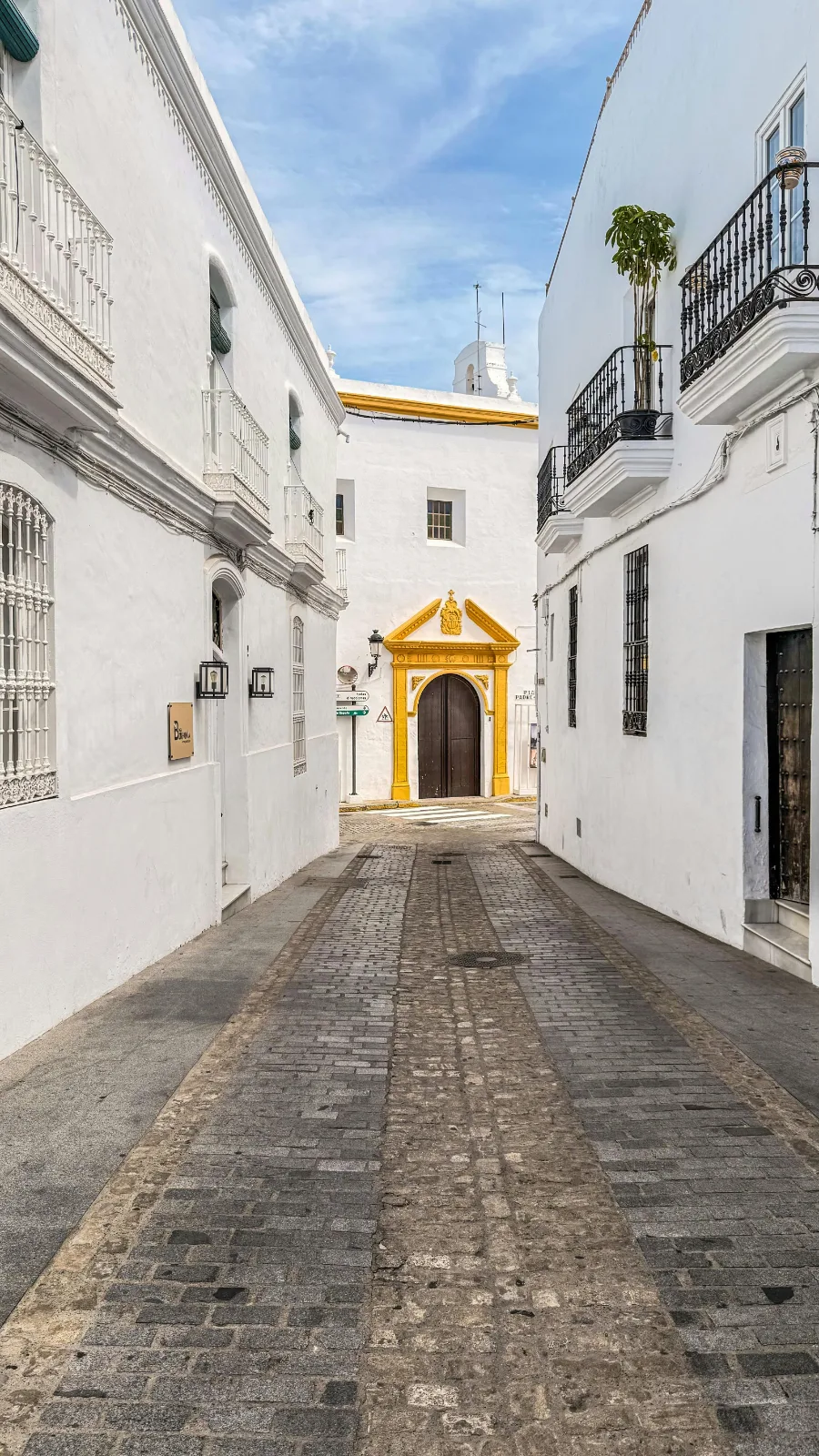
If you have a reservation at a restaurant in the historic centre of Vejer de la Frontera, there's something worth knowing before you drive up the hill: parking in Vejer is not like parking anywhere else. The old town is almost entirely pedestrian, the streets are narrow and cobbled, and in high season finding a spot near the centre can take longer than your meal.
This guide tells you where to park, how much time to allow, and how to reach Calle Judería stress-free.
Why Vejer is different
Vejer is built on a fortified hilltop, surrounded by Almohad walls and a labyrinth of whitewashed alleys designed for mules, not cars. The historic centre — including the Judería, the Arco de la Villa, the Plaza de España and the area around the castle — is a restricted traffic zone. Don't try to drive in following your GPS: you'll end up in a two-metre-wide dead end.
The car stays outside. Always.
Where to park in Vejer
Vejer offers several options depending on the season and your exact destination. These are the most useful if you're coming to eat in the old town:
1. Plaza de España underground car park (the most central)
Where: under the Plaza de España, less than a 5-minute walk from Calle Judería.
Type: paid public car park, covered.
When to use it: any day, but especially if it's raining or you're with someone with reduced mobility. The most comfortable option.
When NOT to use it: on a Saturday in August at 2:00 pm, because it may be full. In high season, arrive early or have a plan B.
2. La Barca de Vejer car park (free, on the outskirts)
Where: at the foot of the hill, next to the N-340 road, about a 15–20 minute walk (uphill) from the old town.
Type: free, open-air, spacious.
When to use it: if you want to save money, if nothing is free up top, or if you fancy walking up and enjoying the views.
When NOT to use it: if you're tight on time for a reservation, or if it's too hot to face an uphill walk.
3. Intermediate parking areas
There are several zones around the old town where you can park on the street (always watch for blue-zone and loading-bay signs):
Avenida de Andalucía and around Parque de los Remedios: 7–10 minutes on foot from the centre.
Plaza del Mercado / Cerro area: closer to the castle, 5–8 minutes from the Judería.
Streets outside the Arco de la Segur: usually have space on weekdays.
In high season (July, August, Holy Week, long weekends) these street options can fill up fast. Carry coins for pay-and-display zones and always check the signs: municipal fines are not up for debate.
How much time to allow before your reservation
This is the part most people underestimate. If you have a table booked, don't calculate the time to "arrive in Vejer"; calculate the time to "sit down at the table". They are two different things.
Our recommendation:
Low season (October to March, weekdays): arrive in Vejer 30 minutes before your reservation. Space is easy, the walk is quick, everything flows.
Mid season (May, June, September, weekends): arrive 45 minutes early. The first car park is likely to be full and you may need to try the next.
High season (July, August, long weekends, Holy Week): arrive 60 minutes early, especially if you've booked for 2:00 pm. Parking can take 20 minutes, and then there's the walk.
Arriving with a margin also gives you something priceless: walking up slowly, looking at the streets, taking photos. Vejer is a town for strolling, not for rushing.
How to walk to Calle Judería
From any of the car parks above, the way to the Judería is on foot. A few useful pointers:
From Plaza de España: cross the square, take Calle Juan Relinque, then follow the signs to the Judería (about 4–5 minutes, gentle slope).
From La Barca de Vejer: climb the Cuesta de la Barca (the slope is named for a reason). 15–20 minutes uphill — take it easy.
From the Cerro / Mercado area: walk down towards the Arco de la Villa and follow the alleyways. 5–8 minutes.
We recommend using your phone with Google Maps open — but on foot, not driving. Pedestrian navigation works well in Vejer; the car version will send you in circles down impossible streets.
Extra tips for a smooth day
Comfortable shoes. No heels. No slippery soles. The streets are cobbled and polished by centuries of use.
Check the rain forecast. When it rains, the stone becomes very slippery. In heavy rain, the covered car park is your friend.
Summer: the uphill walk at 35°C at midday is tough. Water and a hat are worth their weight in gold.
Keys, documents and phone before locking the car. Sounds obvious. It isn't.
Once you're at the table
The hard part is done. From the restaurant's terrace you'll see why it was worth it: the white old town cascading down the hill, and on clear days, Tarifa, Tangier and even Cape Spartel in the distance. Arriving early means sitting down without rushing and enjoying the moment, not recovering from it.
To book: visit our reservations page. We're open Thursday to Monday, lunch only, from 1:00 to 4:30 pm. Closed Tuesdays and Wednesdays.
And if you've booked for a Saturday in August at 2:00 pm: leave home earlier.